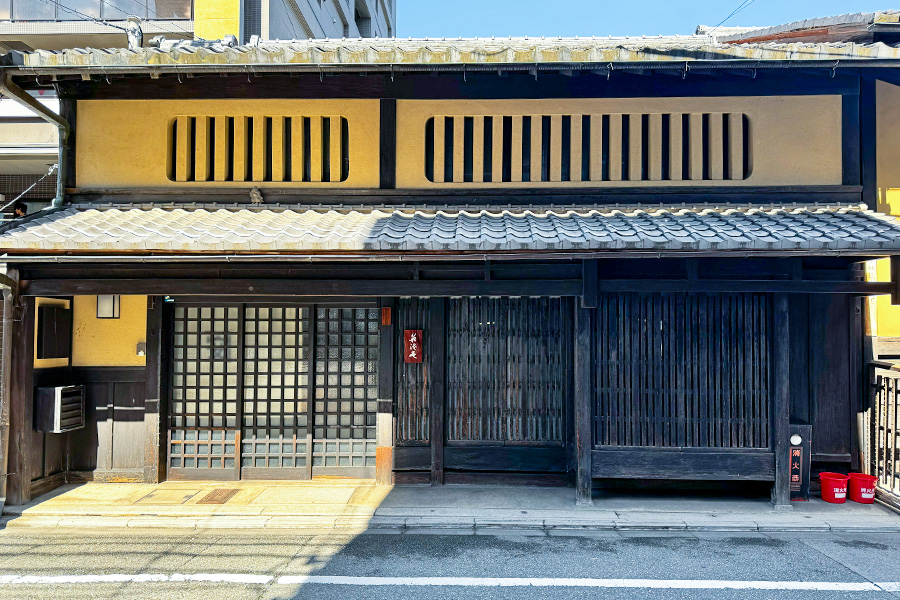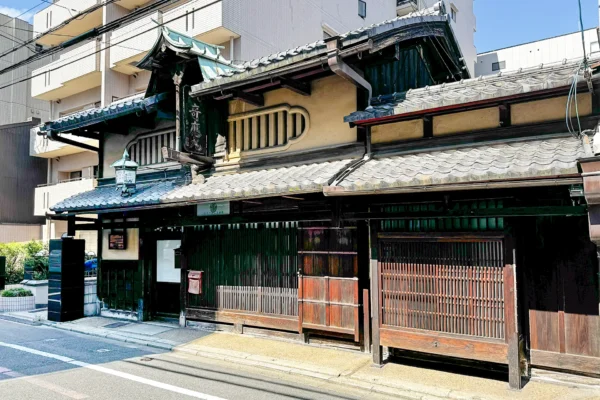
The Noguchi Family Residence is a traditional Kyoto machiya townhouse located in central Kyoto. Dating from the late Edo period, it preserves the characteristic design of a merchant’s residence, offering valuable insight into the architecture and daily life of Kyoto’s townspeople.
The house features the classic narrow frontage and deep interior known as the “eel’s bed” layout, together with a traditional earthen passageway, inner courtyard, and tatami rooms. It remains an important example of Kyoto’s historic urban architecture.
History
Built during the late Edo period, the Noguchi Family Residence served as both a home and workplace for a Kyoto merchant family.
Like many traditional machiya, the building combines commercial and residential functions within a compact urban site. Its architectural layout demonstrates the practical ingenuity that enabled comfortable living in Kyoto’s densely built neighborhoods.
Although many machiya have disappeared over the past century, the Noguchi Family Residence continues to contribute to the preservation of Kyoto’s historic townscape.
Highlights
Traditional Kyoto Machiya
The residence preserves many characteristic features of Kyoto’s traditional merchant houses.
Earthen Passageway
The long tori-niwa connects the entrance to the rear of the house, providing light, ventilation, and working space.
Inner Courtyard
A small courtyard introduces natural light and fresh air into the center of the building, demonstrating the practical wisdom of machiya design.
Merchant Lifestyle
The building illustrates how Kyoto merchants combined business and family life under one roof.
Historic Streetscape
Located along Aburanokoji Street, the residence contributes to one of Kyoto’s traditional neighborhoods where historic townhouses still survive.
Visit Tips
The residence is not generally open to the public, so visitors should appreciate its exterior architecture while respecting the surrounding neighborhood.
Nearby attractions include the Hata Family Residence, Bukko-ji Temple, Nishiki Market, Buntsubaki Building, and ShinPuhKan, making this area ideal for exploring both traditional machiya and Kyoto’s modern architectural heritage.
Information
| Opening Hours |
|
|---|---|
| Admission |
|
| Access |
|
| Address | 544 Fujimoto-cho, Aburanokoji-dori Nishikikoji Sagaru, Nakagyo-ku, Kyoto, Japan |
Noguchi Family Residence : Gallery