
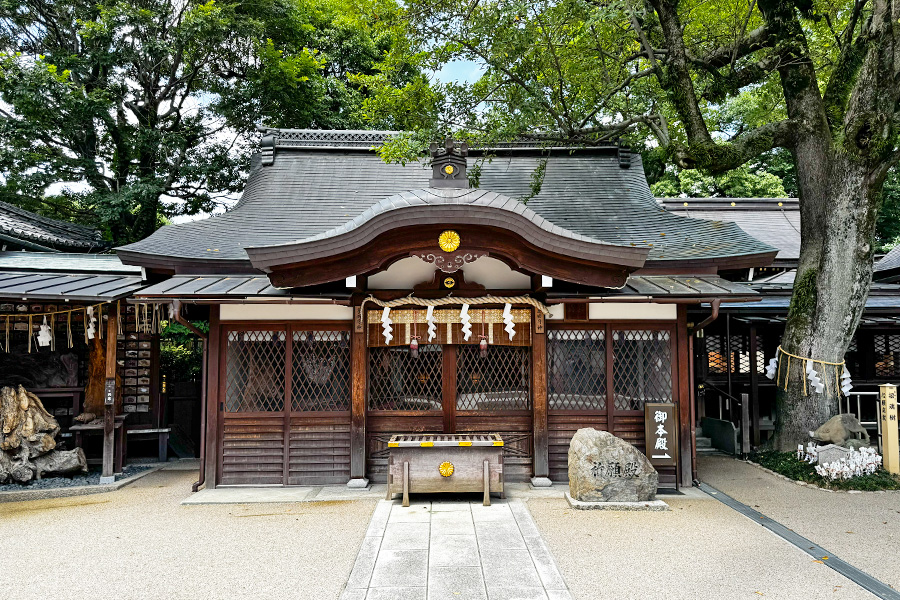
Goo Shrine is a historic Shinto shrine located on the western side of Kyoto Gyoen National Garden. Dedicated to Wake no Kiyomaro and his sister Wake no Hiromushi, the shrine is famous throughout Japan as a place to pray for healthy legs, physical recovery, and protection from misfortune.
Unlike most Japanese shrines, Goo Shrine is guarded not by lion-dog statues but by wild boars. According to legend, hundreds of boars came to the aid of Wake no Kiyomaro after he was attacked and injured, safely guiding him on his journey. This unique story has made the shrine especially popular among athletes, hikers, and anyone wishing for good health.
History
Goo Shrine was established in 1886 by order of Emperor Meiji to honor Wake no Kiyomaro, a loyal statesman of the Nara and early Heian periods. Kiyomaro is remembered for preventing an attempt to seize the Imperial Throne, thereby protecting the imperial lineage.
According to legend, after he was exiled and injured, 300 wild boars appeared to protect him and guide him to safety. Because of this story, the shrine has become one of Japan’s best-known places to pray for healthy legs and recovery from illness or injury.
Highlights
Guardian Boars
Instead of traditional guardian lion-dogs, Goo Shrine features stone boars throughout the grounds. These unusual statues commemorate the legendary animals that protected Wake no Kiyomaro.
Shrine for Healthy Legs
The shrine is widely known as Japan’s shrine for leg health. Runners, athletes, dancers, and hikers often visit to pray for strength, recovery, and success.
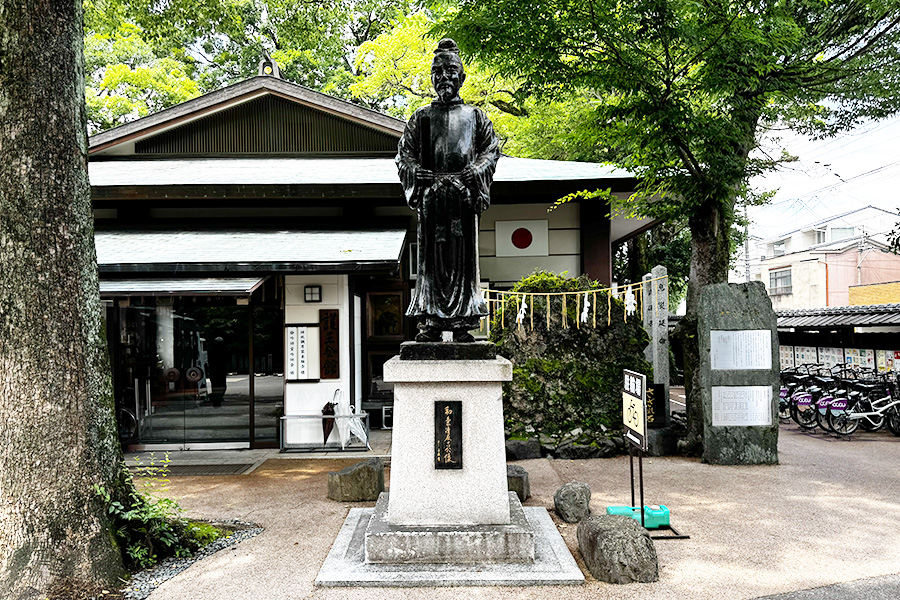
Statue of Wake no Kiyomaro
A bronze statue honors the shrine’s principal deity, whose loyalty to the Imperial Court made him one of the most respected figures of early Japanese history.
Boar Water Basin
The purification fountain features an elegant boar-shaped water spout, reflecting the shrine’s distinctive symbolism and providing a memorable photo opportunity.
Close to Kyoto Gyoen
Located just west of Kyoto Gyoen National Garden, the shrine is easy to combine with visits to the Kyoto Imperial Palace, Shiramine Shrine, and Seimei Shrine.
Visit Tips
Take time to look for the many boar statues hidden throughout the shrine grounds—each has a different design and expression. The shrine’s boar-themed amulets are also among Kyoto’s most popular souvenirs, especially for athletes and people recovering from injuries.
Goo Shrine is within walking distance of Kyoto Gyoen National Garden and several historic shrines, making it an excellent addition to a half-day walking tour of central Kyoto.
Information
| Opening Hours |
|
|---|---|
| Admission |
|
| Access |
|
| Address | 385 Sakura-tsurumaru-cho, Karasuma-dori Shimochojamachi-sagaru, Kamigyo-ku, Kyoto, Japan |
| Website | https://www.gooujinja.or.jp/ |
Goo Shrine : Gallery




Nearby Attractions

Former Arisugawa-no-miya Residence
208m

St. Agnes' Episcopal Church
240m

Kyoto Prefectural Office (Former Main Building)
357m

Daimaru Villa (Former Shimomura Shotaro Residence)
420m

Kyoto Gyoen National Garden
467m
Nakadachiuri Bridge
737m

Yushokan Hall (Doshisha University)
759m

Shoueikan Hall (Doshisha University)
802m