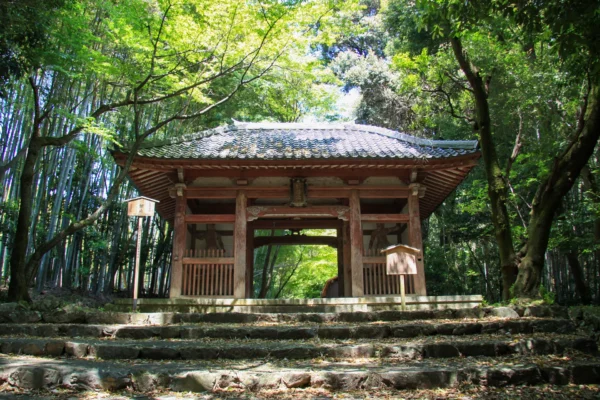
Konzo-ji is a secluded Tendai Buddhist temple nestled deep in the Nishiyama mountains of western Kyoto. Surrounded by forests and peaceful mountain scenery, it offers visitors a tranquil atmosphere far removed from the city’s more crowded tourist destinations.
For centuries, the temple has served as a place of worship and mountain ascetic practice. Today, its quiet grounds, traditional buildings, and seasonal beauty make it a rewarding destination for hikers and travelers seeking a more contemplative side of Kyoto.
History
According to temple tradition, Konzo-ji was founded in 718 by the monk Ryubu. During the early Heian period, Saicho, the founder of the Tendai school in Japan, is said to have visited the temple, after which it became an important Tendai training center in the Nishiyama region.
Like many temples around Kyoto, Konzo-ji suffered repeated destruction during periods of warfare, including the Onin War, and was rebuilt several times. Most of today’s buildings date from the Edo period or later. Throughout its history, the temple has maintained close ties with mountain worship (Sangaku Shinko) and the traditions of ascetic practice in Kyoto’s western mountains.
Highlights
Peaceful Mountain Temple
Experience one of Kyoto’s quietest historic temples surrounded by beautiful forests.
Main Hall
Visit the temple’s traditional main hall, reflecting centuries of Buddhist devotion.
Seasonal Nature
Enjoy fresh greenery in spring and spectacular autumn foliage in the Nishiyama mountains.
Hiking Destination
The temple is a popular stop along hiking routes through Kyoto’s western hills.
Mountain Worship Heritage
Discover the temple’s historical connections with mountain asceticism and spiritual practice.
Visit Tips
Because public transportation is limited, Konzo-ji is best visited by car or as part of a hiking trip through the Nishiyama area. The peaceful surroundings provide an excellent opportunity to experience a quieter side of Kyoto rarely seen by international visitors.
The temple combines well with nearby Yoshimine-dera, Oharano Shrine, Shoji-ji, and Shobo-ji, offering a rewarding journey through the historic temples and natural landscapes of western Kyoto.
Information
| Opening Hours |
|
|---|---|
| Admission |
|
| Access |
|
| Address | 1639 Oharano Ishizukuricho, Nishikyo Ward, Kyoto, Japan |
| Website | https://x.com/nekotorakuda2 |
Konzo-ji Temple : Gallery