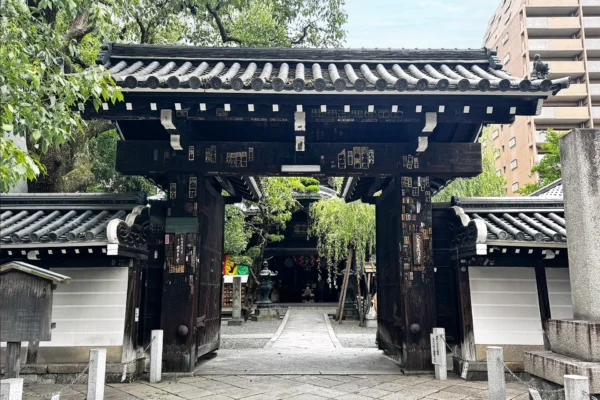
Hakuga Yama is one of the floats featured in Kyoto’s Gion Festival Early Festival (Saki Matsuri). It is inspired by the famous Chinese story of Bo Ya (Hakuga), a master musician whose closest friend, Zhong Ziqi, was the only person who truly understood his music.
The float symbolizes the ideals of true friendship and mutual understanding, themes that have been cherished throughout East Asia for centuries. A figure of Hakuga playing the qin (Chinese zither) serves as the float’s sacred centerpiece.
History
Hakuga Yama is based on the well-known Chinese tale “Bo Ya Breaks His Strings.”
According to the legend, the musician Bo Ya possessed extraordinary skill on the qin, but only his friend Zhong Ziqi could fully appreciate the meaning of his music. After Zhong Ziqi died, Bo Ya broke the strings of his instrument and never played again, believing that no one else could truly understand him.
This story became the origin of the Chinese and Japanese expression “chiin” (知音), meaning a person who truly understands another’s heart or talent. Hakuga Yama preserves this timeless lesson on friendship and mutual respect.
Highlights
The Story of “Bo Ya Breaks His Strings”
The float is inspired by one of China’s most celebrated stories of friendship and music.
Symbol of True Friendship
Hakuga Yama represents the deep bond between people who truly understand one another.
Musician Playing the Qin
Its sacred figure depicts Hakuga performing on a traditional Chinese zither, recalling the legendary tale.
A Float Dedicated to Music
Among the Gion Festival floats, Hakuga Yama is unique for celebrating music, friendship, and cultural refinement.
Visit Tips
Hakuga Yama is located in the Shijo-Karasuma festival district and can easily be visited together with nearby floats inspired by Chinese classics, including Kakkyo Yama, Moso Yama, and Urade Yama.
Learning the stories behind these floats reveals the strong influence of Chinese philosophy and literature on Kyoto’s traditional festival culture.
Information
| Access |
|
|---|---|
| Address | Yata-cho, Ayanokoji-dori Shinmachi Nishi-iru, Shimogyo-ku, Kyoto, Japan |
| Website | http://www.gionmatsuri.or.jp/yamahoko/hakugayama.html |