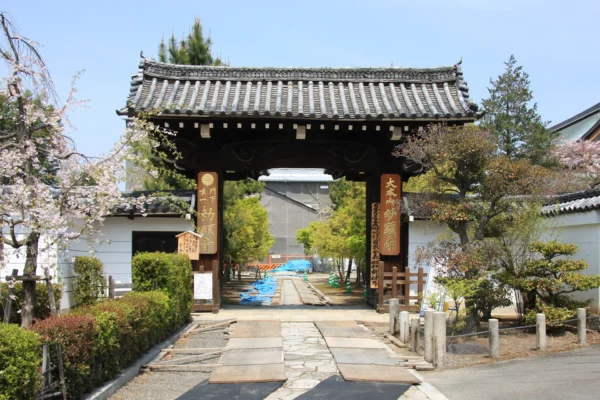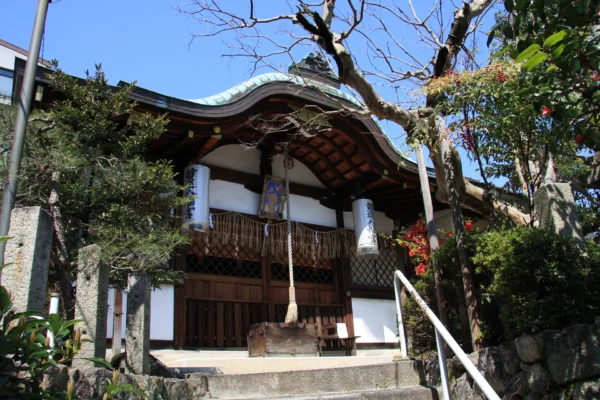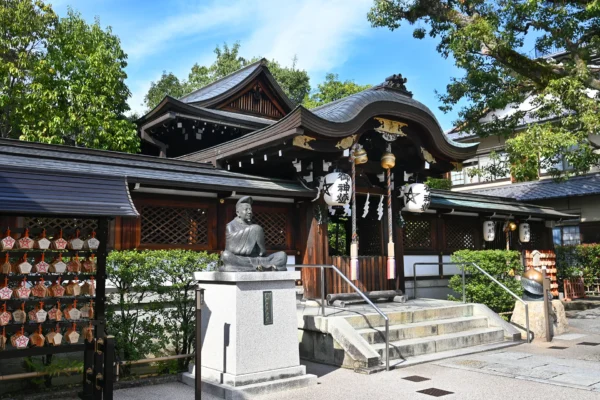
Suika Tenmangu Shrine is believed to be Kyoto’s oldest Tenmangu shrine, dedicated to Sugawara no Michizane, the deity of learning and scholarship. Founded in 923, shortly after Michizane’s death, the shrine has long been revered not only for academic success but also for protection against fire and flood.
Despite its central location, the shrine offers a peaceful atmosphere throughout the year. It is especially famous for its graceful weeping plum trees, which bloom beautifully in late winter and attract photographers and flower lovers from across Kyoto.
History
According to tradition, Suika Tenmangu was established in 923, making it the oldest Tenmangu shrine in Kyoto. It was founded to honor the spirit of Sugawara no Michizane following his death.
The shrine’s unusual name, “Suika” (Water and Fire), reflects its historical role as a guardian against both floods and fires—two of the greatest threats faced by the ancient capital. Today, visitors continue to pray for academic success, family safety, disaster prevention, and good fortune.
Highlights
Kyoto’s Oldest Tenmangu Shrine
Founded in 923, Suika Tenmangu is regarded as Kyoto’s oldest shrine dedicated to Sugawara no Michizane, the patron deity of learning.
Protection from Fire and Flood
The shrine has long been worshipped as a guardian against natural disasters. Many visitors pray here for household safety and protection from accidents.
Weeping Plum Blossoms
The elegant red and white weeping plum trees bloom from late February through mid-March, creating one of Kyoto’s most beautiful early spring displays.
Main Sanctuary
The peaceful Main Sanctuary welcomes students, families, and visitors praying for academic achievement, good fortune, and protection.
Quiet Local Shrine
Unlike Kyoto’s larger Tenmangu shrines, Suika Tenmangu offers a calm atmosphere where visitors can enjoy seasonal flowers without large crowds.
Visit Tips
Visit between late February and mid-March to see the famous weeping plum blossoms in full bloom. Early morning offers the most peaceful experience and excellent photography conditions.
The shrine is within walking distance of Seimei Shrine, the Former Kyoto Prefectural Office Main Building, Goo Shrine, and Kyoto Gyoen National Garden, making it an excellent stop on a walking tour of central Kyoto.
Information
| Opening Hours |
|
|---|---|
| Admission |
|
| Access |
|
| Website | https://www.instagram.com/suikatenmanguu |