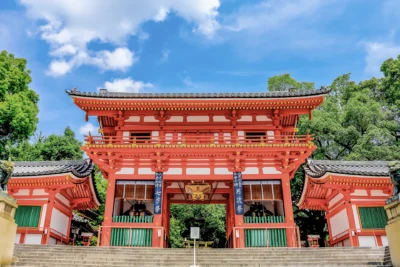
Chion-in Temple is the head temple of Jōdo (Pure Land) Buddhism and one of Kyoto’s most impressive temple complexes. Nestled at the foot of the Higashiyama mountains, it is famous for its monumental Sanmon Gate, magnificent wooden halls, and peaceful gardens. As the temple where the teachings of Hōnen, the founder of Jōdo Buddhism, were established, Chion-in remains one of Japan’s most important religious sites.
Visitors are welcomed by vast temple grounds, elegant architecture, and beautiful seasonal scenery. Whether you come during the cherry blossom season, autumn foliage, or a special evening illumination, Chion-in offers one of Kyoto’s most memorable temple experiences.
History
Chion-in was founded in 1234 on the site where the Buddhist monk Hōnen spent his final years and passed away. Established by his disciple Genchi, the temple later received strong support from Tokugawa Ieyasu and the Tokugawa shogunate, leading to the construction of the magnificent buildings seen today.
The temple’s Sanmon Gate, completed in 1621, is designated a National Treasure and is the largest surviving wooden temple gate in Japan. The Miei-do Hall, which enshrines a statue of Hōnen, remains the spiritual center of the Jōdo school and one of the largest wooden temple halls in the country.
Highlights
National Treasure Sanmon Gate
Pass through Japan’s largest surviving wooden temple gate, an unforgettable symbol of Chion-in.
National Treasure Miei-do Hall
Visit the temple’s magnificent main hall, where a statue of Hōnen is enshrined.
Yuzen-en Garden
Enjoy elegant Japanese gardens featuring ponds, waterfalls, and carefully designed landscapes.
Great Temple Bell
See one of Japan’s largest Buddhist bells, famous for the New Year’s Eve bell-ringing ceremony.
Seasonal Illuminations
Spring cherry blossoms and autumn leaves are beautifully illuminated during special evening events.
Visit Tips
Chion-in’s grounds are extensive, so allow at least one to two hours to explore the Sanmon Gate, Miei-do Hall, Yuzen-en Garden, and the Great Bell. Some paths include gentle slopes and stone steps, making comfortable walking shoes a good idea.
Early morning is the best time to experience the temple’s peaceful atmosphere before larger crowds arrive. Chion-in is also perfectly located for a walking route that includes Maruyama Park, Yasaka Shrine, Shoren-in, Kōdai-ji, and Gion.
Information
| Opening Hours |
|
|---|---|
| Admission |
|
| Access |
|
| Address | 400 Rinka-cho, Higashiyama Ward, Kyoto, Japan |
| Website | https://www.chion-in.or.jp/ |
Chion-in Temple : Gallery