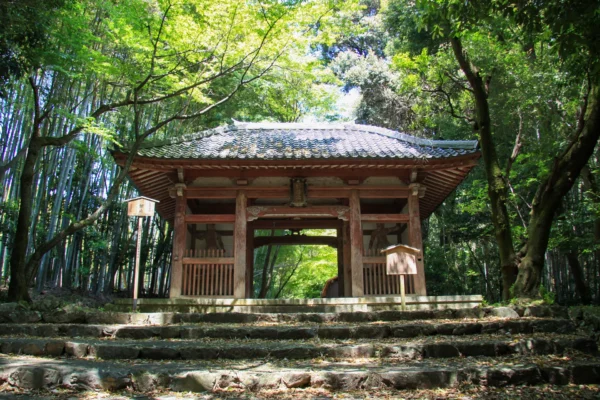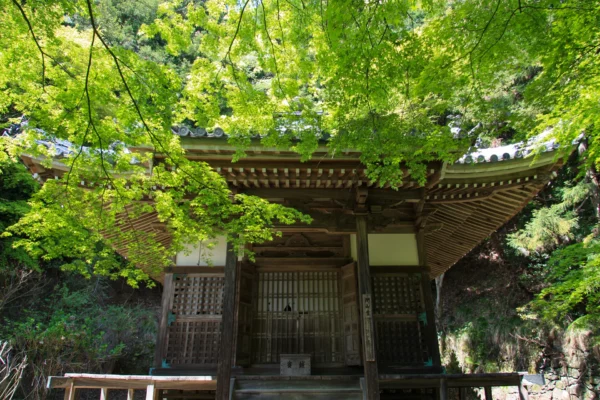
Shobo-ji is a tranquil Shingon Buddhist temple located in Kyoto’s scenic Oharano district. Surrounded by the gentle hills of western Kyoto, it is affectionately known as “Nishiyama no Odaishi”, reflecting its long association with Kukai (Kobo Daishi), the founder of Shingon Buddhism.
The temple is particularly admired for its peaceful atmosphere and its elegant dry landscape garden, traditionally attributed to the celebrated landscape designer Kobori Enshu. Away from Kyoto’s busy sightseeing areas, Shobo-ji offers visitors an opportunity to appreciate traditional Japanese gardens in a quiet mountain setting.
History
According to temple tradition, Shobo-ji was founded in 754 by the Chinese monk Ganjin, who introduced important Buddhist teachings to Japan during the Nara period. After falling into decline, the temple was later revived by Kukai (Kobo Daishi) during the early Heian period and became affiliated with the Shingon school.
Most of the present buildings date from the early Edo period. The temple’s renowned Hosho-en Garden is traditionally attributed to Kobori Enshu, one of Japan’s greatest garden designers. Skillfully incorporating the surrounding Nishiyama hills into its composition, the garden is recognized as one of the hidden landscape treasures of western Kyoto.
Highlights
Hosho-en Garden
Admire the beautiful dry landscape garden traditionally attributed to Kobori Enshu.
Main Hall
Visit the peaceful main hall dedicated to the temple’s principal Buddhist images.
Kobo Daishi Heritage
Discover the temple’s long connection with Kukai, one of Japan’s most influential Buddhist monks.
Seasonal Beauty
Enjoy cherry blossoms, fresh greenery, hydrangeas, and vibrant autumn foliage.
Quiet Mountain Temple
Experience one of Kyoto’s lesser-known temples in a peaceful natural environment.
Visit Tips
Spend time quietly viewing Hosho-en Garden from the temple buildings. The scenery changes beautifully with each season, making Shobo-ji rewarding throughout the year.
Shobo-ji combines well with Yoshimine-dera, Oharano Shrine, and Shoji-ji (Temple of Flowers), creating a relaxing route through Kyoto’s historic Oharano district. Autumn is particularly recommended, when the surrounding maple trees create a spectacular display of color.
Information
| Opening Hours |
|
|---|---|
| Admission |
|
| Access |
|
| Address | 1102 Oharano Minami Kasugacho, Nishikyo Ward, Kyoto, Japan |
| Website | https://kyoto-shoboji.com/ |
Shobo-ji Temple : Gallery