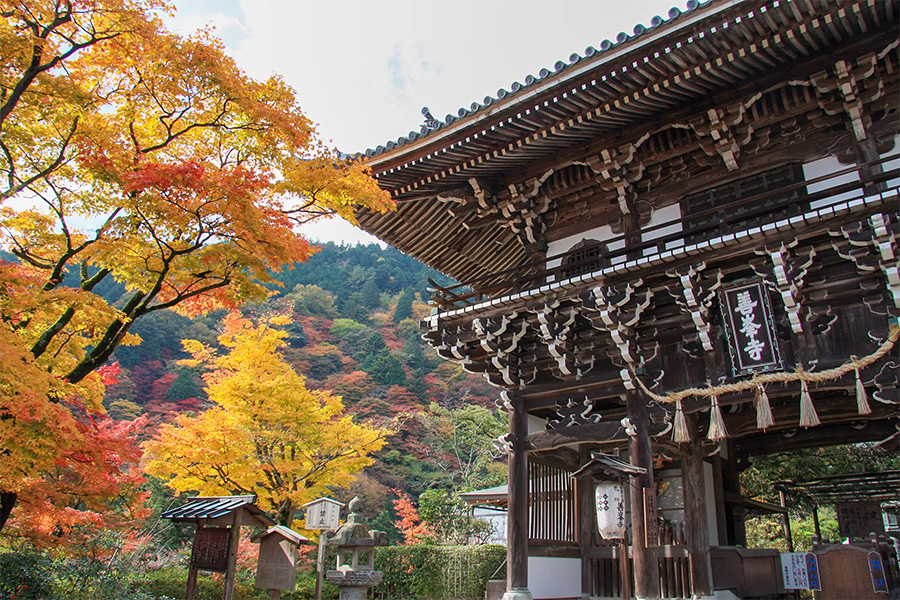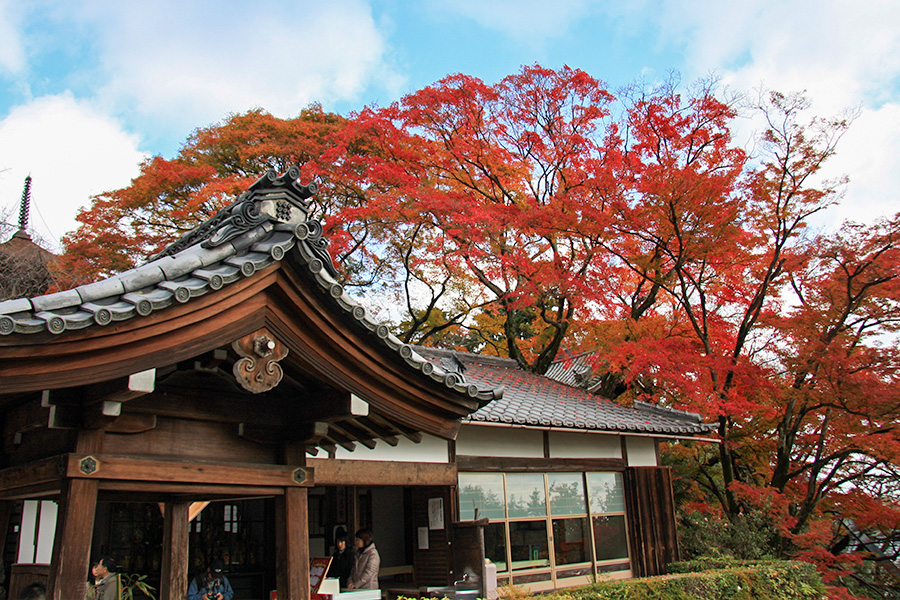
Yoshimine-dera is a historic Tendai Buddhist temple located on the western mountains overlooking Kyoto. As Temple No. 20 of the Saigoku Kannon Pilgrimage, it has welcomed pilgrims for nearly a thousand years. Its expansive mountainside grounds offer breathtaking panoramic views of Kyoto City, making it one of the finest scenic temples in western Kyoto.
Covering nearly 30,000 tsubo (about 100,000 square meters), the temple complex features elegant halls, pagodas, and gardens surrounded by seasonal flowers. Cherry blossoms in spring, hydrangeas in early summer, and brilliant autumn foliage make Yoshimine-dera a favorite destination throughout the year.
History
Yoshimine-dera was founded in 1029 by the Tendai monk Gensan. Supported by Emperor Go-Ichijo and Emperor Go-Suzaku, it quickly became one of western Kyoto’s most important temples dedicated to Kannon, the Bodhisattva of Compassion.
Much of the temple was destroyed during the Onin War (1467–1477), but it flourished again during the Edo period thanks to the patronage of Keishoin, the mother of Tokugawa Tsunayoshi, the fifth Tokugawa shogun. Many of the buildings standing today date from this period of reconstruction.
The temple is also famous for its remarkable Yuryu-no-Matsu (Swimming Dragon Pine), a National Natural Monument estimated to be around 600 years old. Stretching approximately 37 meters, it is regarded as one of Japan’s most extraordinary pine trees.
Highlights
Yuryu-no-Matsu
See the spectacular National Natural Monument, a 37-meter-long pine tree resembling a soaring dragon.
Panoramic Kyoto Views
Enjoy sweeping views across Kyoto City and the surrounding mountains.
Saigoku Pilgrimage Temple
Visit one of the most important temples on Japan’s famous 33-temple Kannon pilgrimage.
Seasonal Flowers
Experience cherry blossoms, hydrangeas, and magnificent autumn colors throughout the year.
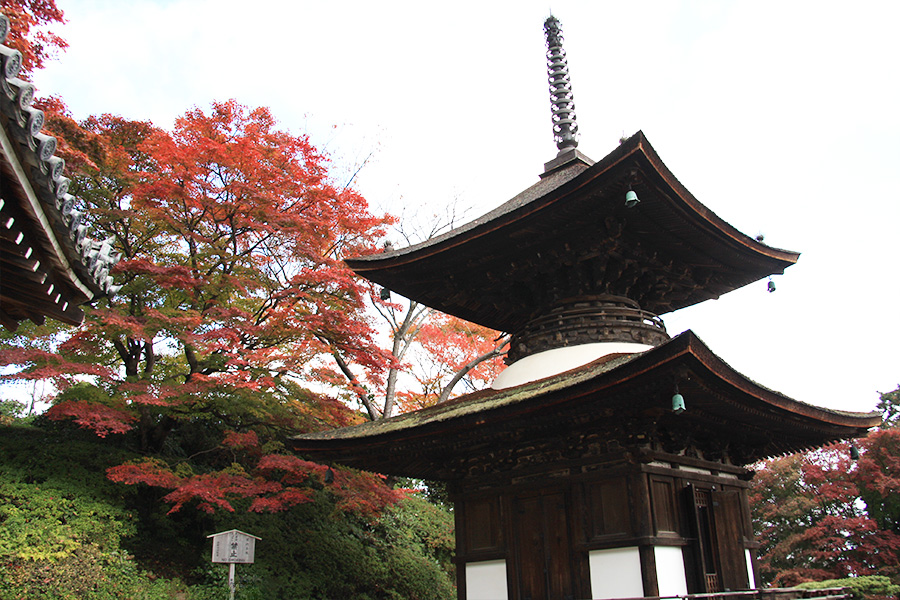
Tahoto Pagoda
Admire the elegant two-storied pagoda reconstructed during the Edo period.
Visit Tips
Allow at least 90 minutes to two hours to explore the spacious temple grounds. Walking between the main halls, gardens, and viewpoints is one of the highlights of the visit.
The hydrangea season in June and the autumn foliage in November are especially popular. Yoshimine-dera also pairs well with nearby Oharano Shrine, Shobo-ji Temple, and Shoji-ji (Flower Temple) for a rewarding journey through Kyoto’s peaceful Oharano district.
Information
| Opening Hours |
|
|---|---|
| Admission |
|
| Access |
|
| Address | 京都市西京区大原野小塩町1372 |
| Website | http://www.yoshiminedera.com/ |
Yoshimine-dera Temple : Autumn Leaves