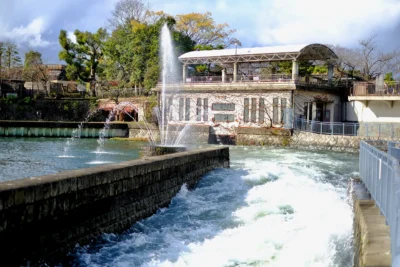
Suirokaku Aqueduct is a striking brick aqueduct located within the grounds of Nanzen-ji Temple in eastern Kyoto. Completed in 1890 as part of the Lake Biwa Canal project, it is one of Kyoto’s most iconic landmarks where traditional temple architecture meets modern engineering.
Still carrying water today, the aqueduct remains an active part of Kyoto’s water system. Besides being a popular sightseeing spot, it is also regarded as one of Japan’s most significant examples of Meiji-era civil engineering and modern architecture.
History
The aqueduct was constructed as part of the ambitious Lake Biwa Canal project, which supplied water and electricity to Kyoto during the Meiji Period. Engineers adopted advanced Western construction techniques while designing the elegant brick arches seen today.
Although some people initially opposed building a modern structure inside the historic temple grounds, the aqueduct eventually became one of Nanzen-ji’s most recognizable landmarks. Today, it is admired as a rare example of traditional Japanese scenery harmonizing with modern industrial heritage.
Highlights
Brick Arch Design
The series of elegant brick arches creates one of Kyoto’s most photogenic architectural scenes.
Lake Biwa Canal
Water from Lake Biwa still flows through the aqueduct, making it both a historic monument and a functioning piece of infrastructure.
Popular Photography Spot
The repeating arches create beautiful perspectives that attract photographers throughout the year.
Harmony of Tradition and Modernity
Few places in Japan combine a centuries-old Zen temple with Meiji-era engineering as successfully as Suirokaku.
Modern Architectural Heritage
The aqueduct is an important example of Japan’s modernization and is popular with visitors interested in architecture, engineering, and industrial heritage.
Visit Tips
Many visitors explore Suirokaku after touring Nanzen-ji Temple. Early morning offers the quietest atmosphere and the best opportunities for photography.
The aqueduct is also within walking distance of Eikando Temple, the Philosopher’s Path, and the Lake Biwa Canal Museum, making it easy to include in a full day of sightseeing.
Information
| Opening Hours |
|
|---|---|
| Admission |
|
| Access |
|
| Address | Nanzenji Fukuchicho, Sakyo-ku, Kyoto, Japan |
Suirokaku Aqueduct : Gallery