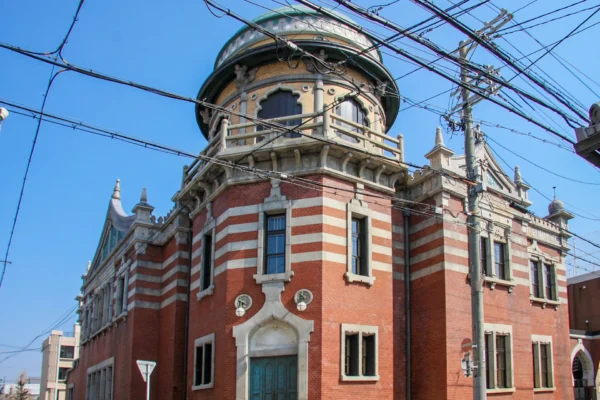
The Ryukoku University Main Building is one of Kyoto’s oldest surviving academic buildings. Completed in 1879, it represents the early years of Japan’s modernization, when Western architectural ideas were first incorporated into educational institutions while retaining elements of traditional Japanese design.
Built as the main building of the Daikyo-ko, the educational institution of the Hongwanji branch of Jodo Shinshu Buddhism, it continues to serve as the symbolic heart of Ryukoku University’s Omiya Campus. Its distinctive red-brick exterior and harmonious blend of Japanese and Western architectural elements make it one of Kyoto’s most significant Meiji-era buildings.
History
Ryukoku University’s origins date back to 1639, when a Buddhist academy was established within Nishi Hongan-ji Temple.
The present Main Building was completed in 1879 as Japan embraced modern education during the Meiji era. Although its architect remains unknown, the building became one of Kyoto’s earliest Western-style educational structures, combining imported architectural ideas with traditional Japanese craftsmanship.
Still in active use today, the building has been designated an Important Cultural Property of Japan, reflecting its outstanding architectural and educational significance.
Highlights
One of Kyoto’s Oldest School Buildings
Completed in 1879, the building is among the city’s earliest surviving examples of Western-style educational architecture.
Red Brick Architecture
Its elegant red-brick walls, contrasting white detailing, and balanced façade create one of Kyoto’s most recognizable Meiji-era architectural landmarks.
Fusion of East and West
Western architectural composition is combined with traditional Japanese construction techniques, illustrating the transition from traditional to modern architecture during the Meiji period.
Symbol of Ryukoku University
The building has remained the centerpiece of the Omiya Campus for more than 140 years and continues to represent one of Japan’s oldest private universities.
Historic Educational Heritage
The Main Building reflects the modernization of higher education in Japan and the important role of Buddhist institutions in that transformation.
Visit Tips
As the building remains part of an active university campus, visitors should respect classes and campus activities while exploring the exterior.
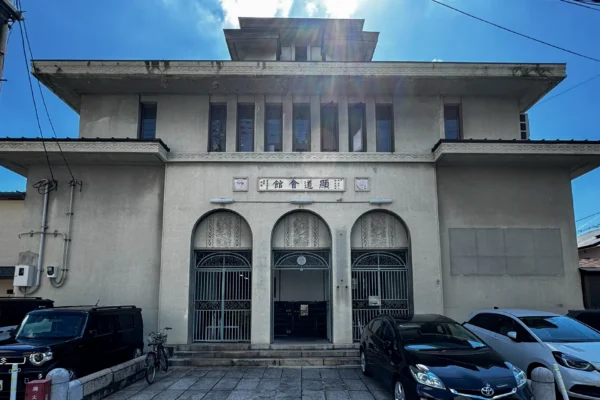
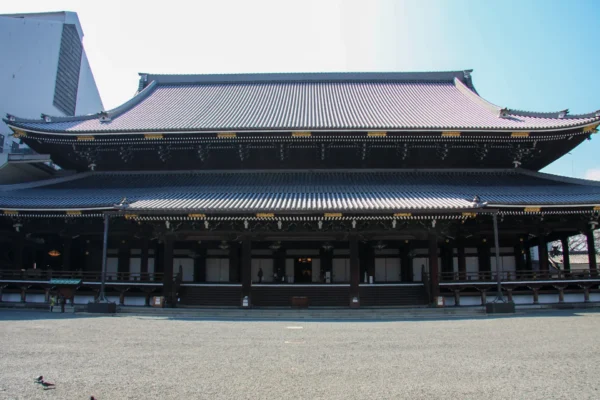
The Omiya Campus is especially rewarding for architecture enthusiasts, offering a rare opportunity to experience one of Japan’s earliest modern university buildings. Nearby Nishi Hongan-ji Temple, Ryukoku Museum, and the Kyoto District Administrative Office create an excellent walking route exploring Kyoto’s religious and educational heritage.
Information
| Opening Hours |
|
|---|---|
| Admission |
|
| Access |
|
| Address | 125-1 Daiku-cho, Shichijo-dori Omiya Higashi-iru, Shimogyo-ku, Kyoto, Japan |
Ryukoku University Main Building : Gallery