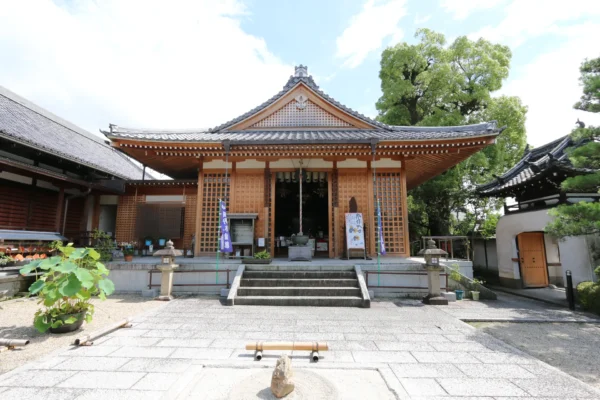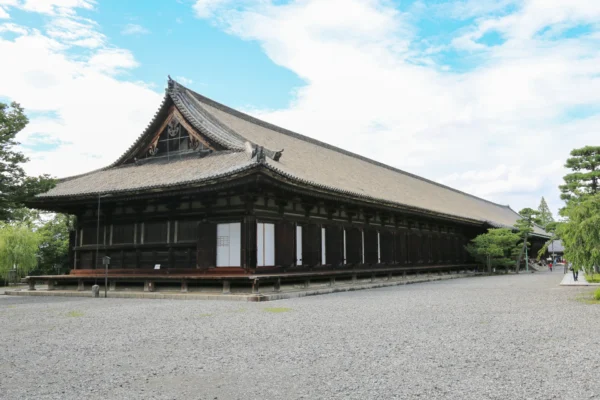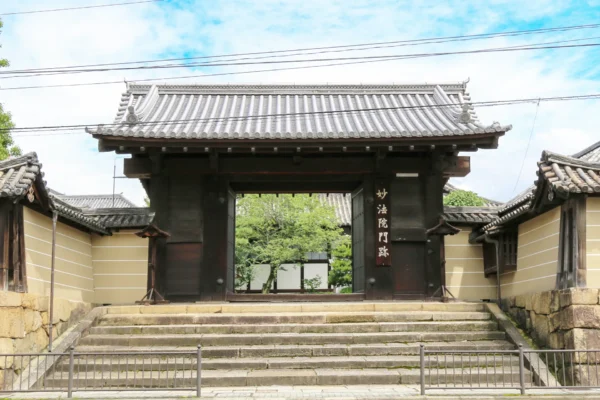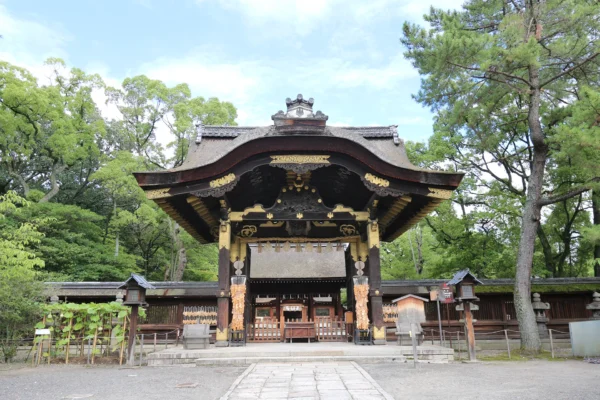
Yogen-in Temple is one of Kyoto’s most fascinating historic temples, combining remarkable works of art with dramatic stories from Japan’s age of samurai warfare. Located beside Sanjusangen-do, the temple is especially famous for its “Blood Ceiling” and the magnificent painted sliding doors created by the celebrated artist Tawaraya Sotatsu.
The temple also tells the intertwined stories of the Toyotomi and Tokugawa families, making it a unique destination where art, politics, and military history come together. Its quiet atmosphere invites visitors to appreciate both the beauty of Momoyama-period culture and the sacrifices made during one of Japan’s most turbulent eras.
History
Yogen-in was founded in 1594 by Yodo-dono, the wife of Toyotomi Hideyoshi, in memory of her father, Azai Nagamasa. After the original temple was destroyed by fire, it was rebuilt in 1621 by Sugen-in (Oeyo), Yodo-dono’s younger sister and the wife of Tokugawa Hidetada, the second Tokugawa shogun.
The temple is best known for its famous Blood Ceiling, made from floorboards taken from Fushimi Castle, where Torii Mototada and his followers fought to the death in 1600. Rather than discarding the bloodstained boards, they were incorporated into the temple ceiling as a memorial to those who died. Yogen-in also houses nationally important paintings by Tawaraya Sotatsu, including the celebrated White Elephant and Kirin cedar-door paintings.
Highlights
The Blood Ceiling
See the preserved ceiling created from the floorboards of Fushimi Castle, commemorating the sacrifice of Torii Mototada and his warriors.
Paintings by Tawaraya Sotatsu
Admire masterpieces by one of the founders of the Rinpa school of Japanese painting.
Temple of Two Great Families
Discover the remarkable history connecting both the Toyotomi and Tokugawa clans.
Momoyama Architecture
Enjoy elegant temple architecture and richly decorated interiors dating from the early Edo period.
Living History
Experience a place where art, faith, and the dramatic events of Japan’s samurai era come together.
Visit Tips
Joining one of the temple’s guided explanations greatly enhances the visit, especially when viewing the Blood Ceiling and Sotatsu’s paintings. Understanding the historical background makes the artwork even more meaningful.
Yogen-in is only a one-minute walk from Sanjusangen-do and is easily combined with the Kyoto National Museum, Toyokuni Shrine, and Hoko-ji Temple. Together, these sites provide an outstanding introduction to Kyoto’s Momoyama and early Edo history.
Information
| Opening Hours |
|
|---|---|
| Admission |
|
| Access |
|
| Address | 656 Sanjusangendomawari, Higashiyama Ward, Kyoto, Japan |
| Website | https://yougenin.jp/ |
Yogen-in Temple : Gallery