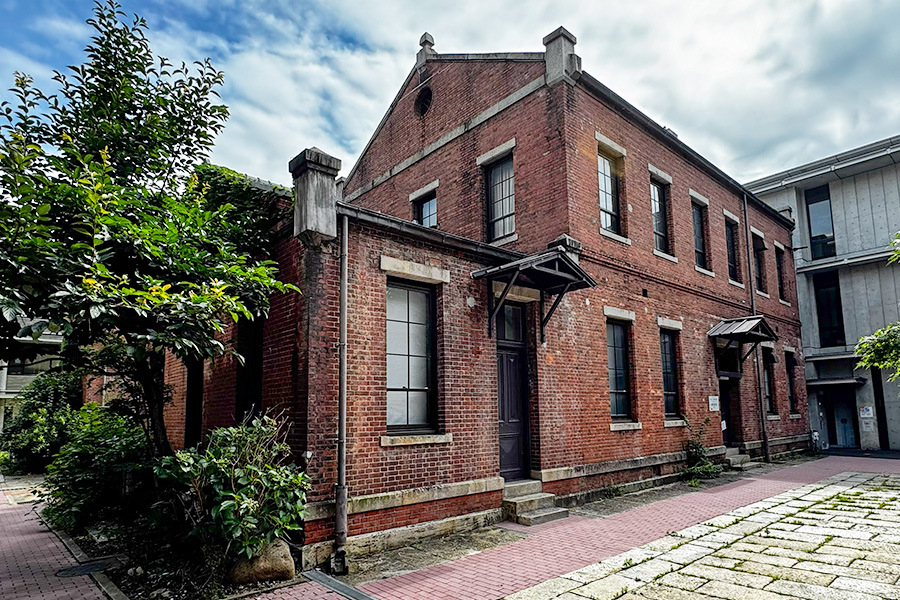
The Center for Southeast Asian Studies at Kyoto University occupies the beautifully preserved Former Kyoto Imperial University Library, completed in 1906. Built during the Meiji era, this elegant red-brick building is one of the oldest surviving structures on Kyoto University’s Yoshida Campus.
Originally constructed as the university’s main library, the building features classic Western architectural elements combined with traditional Japanese craftsmanship. Today, although it serves as a research institute and is not generally open to the public, it remains one of Kyoto’s finest examples of early twentieth-century academic architecture.
History
Kyoto Imperial University, founded in 1897, was Japan’s second Imperial University. As the university expanded, a new library was completed in 1906 to support its growing academic community.
Constructed in red brick with granite detailing, the library reflected the latest Western architectural influences introduced during the Meiji period. After a new library building was opened, the historic structure was adapted for academic research and now houses the Center for Southeast Asian Studies while preserving its original architectural character.
Highlights
Historic Red-Brick Architecture
The building’s impressive red-brick façade is one of the defining landmarks of Kyoto University’s historic campus and an outstanding example of Meiji-era academic architecture.
Former Kyoto Imperial University Library
Completed in 1906, the building originally served as the university’s main library and played an important role in the development of higher education in Japan.
Granite Architectural Details
Granite window surrounds and horizontal stone bands contrast beautifully with the red brickwork, demonstrating the refined craftsmanship of the Meiji period.
Ivy-Covered Façade
Seasonal ivy climbing across the walls creates one of Kyoto University’s most picturesque scenes, especially during autumn when the leaves turn brilliant shades of red.
Landmark of Kyoto’s Modern Architecture
Together with the Former Kyoto Prefectural Office Main Building, St. Agnes’ Episcopal Church, the Former Residence of Joseph Hardy Neesima, and the Kyoto Orthodox Church, the building represents Kyoto’s rich collection of Meiji-era Western architecture.
Visit Tips
As the building remains an active research facility, visitors can admire only its exterior. The southwest corner offers one of the best viewpoints for appreciating the building’s elegant proportions and historic brickwork.
A visit can easily be combined with the Kyoto University Museum, the Clock Tower Centennial Hall, Yoshida Shrine, and Chion-ji Temple, making this an excellent walking route for architecture and history enthusiasts.
Information
| Opening Hours |
|
|---|---|
| Admission |
|
| Access |
|
| Address | 46 Yoshida Shimoadachi-cho, Sakyo-ku, Kyoto, Yoshida Campus, Kyoto University, Japan |
Center for Southeast Asian Studies, Kyoto University (Former Kyoto Imperial University Library) : Gallery